
Video
The world of physics is undergoing an explosion of breakthrough achievements, including the realization of long-predicted phenomena such as the observation of the Higgs Boson, measurement of gravitational waves, and the use of particle beams to destroy inoperable brain tumors. Behind these achievements is the enabling technology of vacuum. Beginning with the simple question “Why do we need vacuum?” for this research, we will move on to discuss the types of vacuum systems required, and finally some of the challenges physics researchers face in achieving sufficient vacuum, and some techniques they employ to overcome them. Achieving the very low pressure conditions required for these processes is not straightforward. For example, creating the vacuum necessary for particle physics research requires at least three, and often four, different vacuum pump technologies. Understanding how gas molecules behave at sub-atmospheric pressures is critical in designing effective vacuum environments, choosing the correct components and materials, and understanding maintenance requirements. This webinar explains the process of generating, measuring, and maintaining vacuum pressures specific to these areas of physics research.
Ion Pump
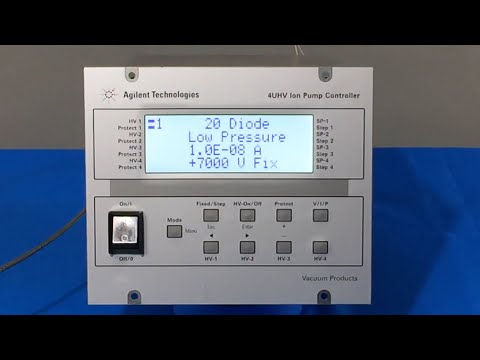
How to Setup I-Protect and Step Function for the 4UHV Controller
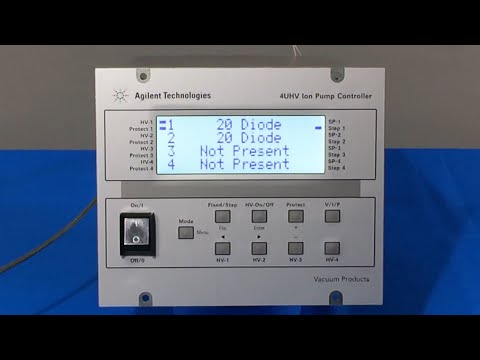
How to Change the Pressure Units on a 4UHV Controller
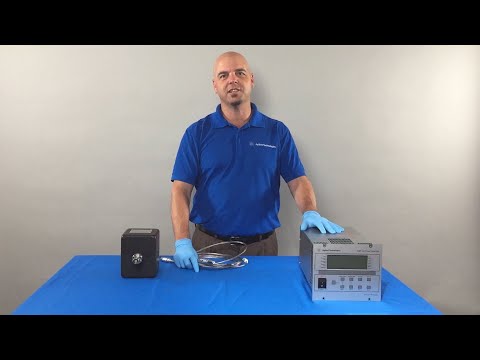
How to use the Agilent 4UHV Ion Pump Controller to run any Ion Pump

4UHV Ion Pump Controller - Multichannel Ion Pump Power and Control
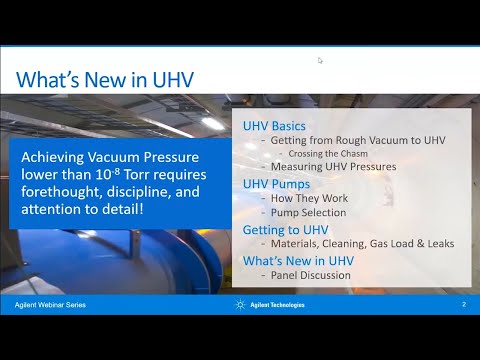
What’s New In Ultrahigh Vacuum Technology
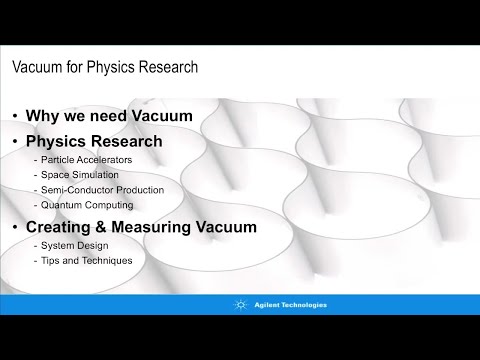
Vacuum for Physics Research